
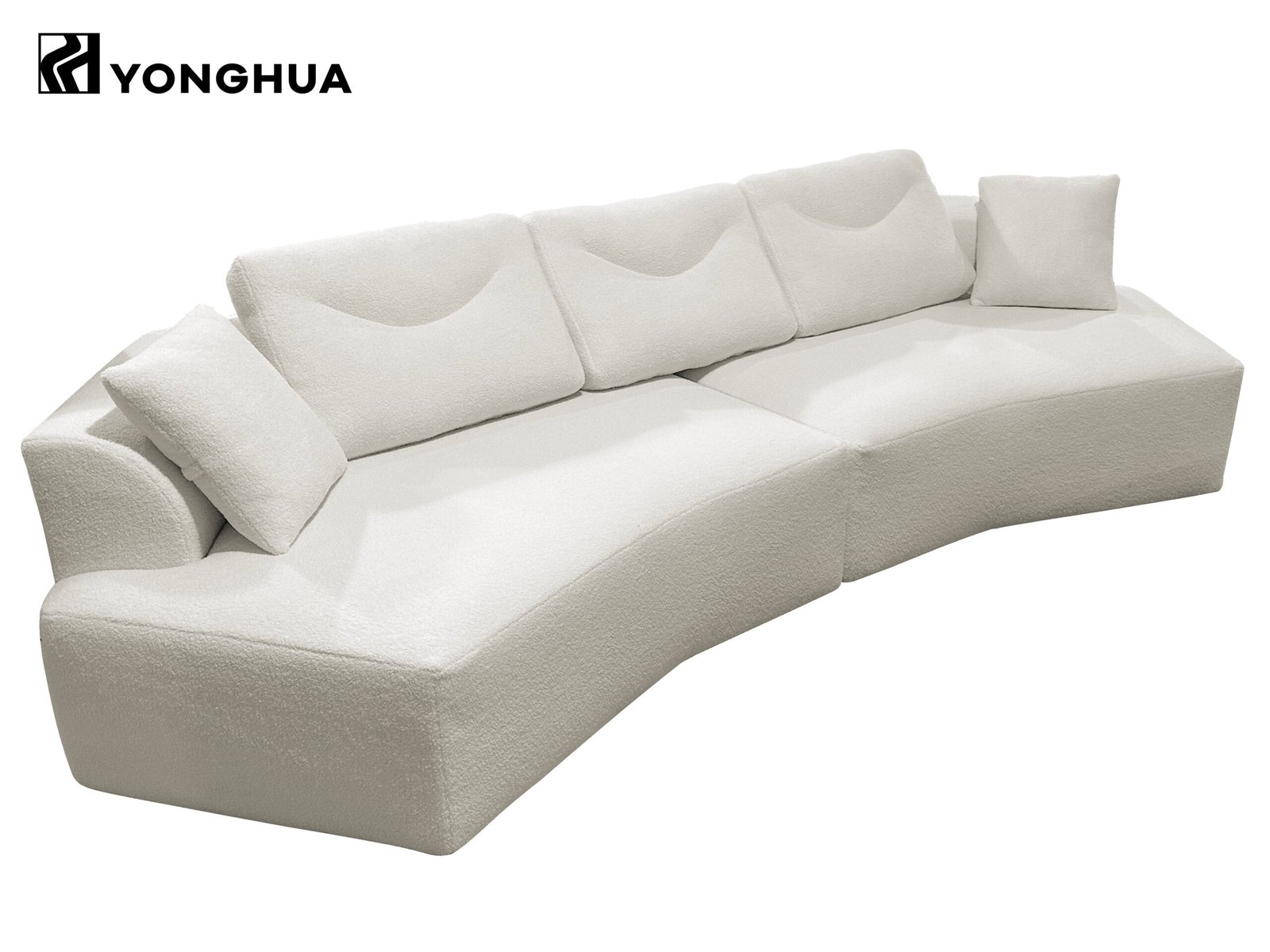
Confused about which fabric to choose for your compressed sofa?
Compressed sofas come in a variety of fabrics—each with its own look, feel, and benefits. Choosing the right one depends on your market, lifestyle, and usage needs.
In this guide, I’ll break down the most common types of fabrics used in compressed sofas, including their durability, comfort, and care requirements, so you can make smarter sourcing decisions.
Why does fabric choice matter for compressed sofas?
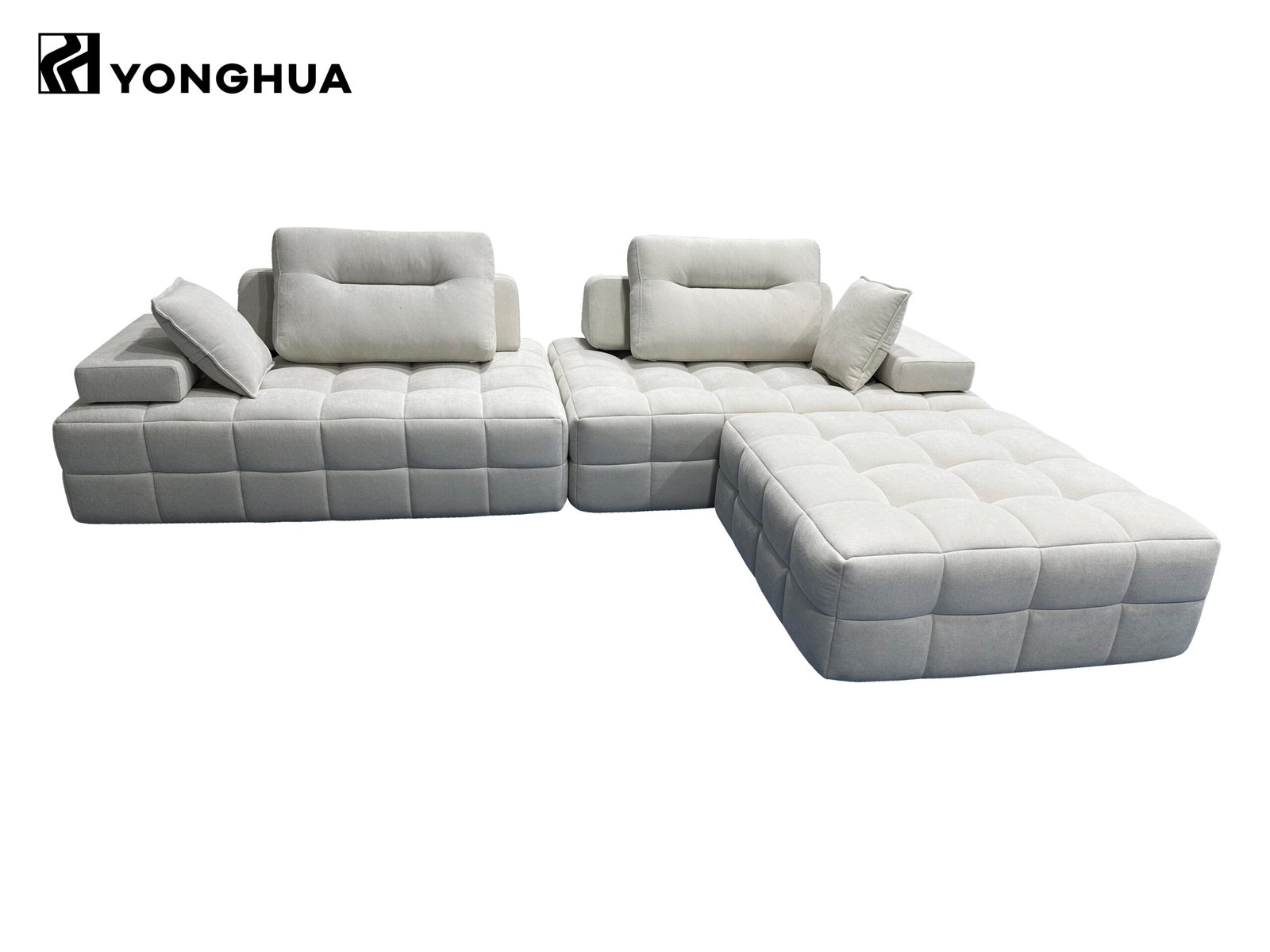
Think fabric is just about color? Think again.
The fabric used on a compressed sofa affects comfort, appearance, maintenance, and long-term performance—especially after vacuum-packing and expansion.
When compressed and sealed in plastic, the material must survive extreme pressure. Then, once unboxed, it must bounce back, wrinkle-free, and stay beautiful under everyday use.
That’s why at HSM, we test all our fabrics not just for looks, but for:
- Wrinkle recovery after compression
- Durability under friction (Martindale > 20,000 cycles)
- Colorfastness to light, washing, and rubbing
- Water resistance and stain repellency
- Texture feel and market trends
Let’s explore the top contenders.
What is polyester fabric and why is it so common?
Polyester is the go-to fabric for most entry-level and mid-range compressed sofas.
Polyester is strong, affordable, easy to clean, and holds up well to vacuum compression.
Key Benefits:
- Resistant to stains and fading
- Great wrinkle recovery after unpacking
- Soft feel with wide texture variety (plain, woven, chenille-like)
- Lower cost, ideal for online and mass market
Care:
Just vacuum and wipe with mild soap. Most stains can be removed easily.
Best for: e-commerce sellers, budget lines, pet families
Is microfiber better for families and pets?
Yes—and it’s a top seller in North America.
Microfiber is ultra-soft, dense, and tightly woven, making it nearly spill-proof and scratch-resistant.
Pros:
- Liquid-resistant surface (water beads on top)
- Soft and cozy to touch, great for lounging
- Very durable under daily wear
- Hides dirt and minor marks well
Cons:
- Can attract pet hair and dust
- Static-prone in dry climates
Best for: family homes, pet owners, rental properties
What about faux leather or PU?
Faux leather (PU) is popular for modern and industrial-style sofas.
It looks like leather, feels smooth, and resists stains—at a fraction of the price.
| Feature | Rating |
|---|---|
| Water resistance | ★★★★★ |
| Compression recovery | ★★★★☆ |
| Scratch resistance | ★★★★☆ |
| Cold/hot sensitivity | ★★★☆☆ |
It wipes clean with a damp cloth and gives a sleek, premium look. But it can crack over time in extreme heat/cold.
Best for: modern designs, Airbnb, commercial spaces
Is linen fabric suitable for compressed sofas?
Linen looks airy, relaxed, and upscale—but it’s not wrinkle-free.
While linen adds texture and breathability, it requires extra attention during compression.
Pros:
- Eco-friendly and biodegradable
- Breathable and perfect for warm climates
- Softens over time with use
Cons:
- Wrinkles easily (even after steaming)
- Slightly higher maintenance
- May not survive aggressive compression unless blended
We often use linen-blends (like poly-linen) to get the look without the hassle.
Best for: boho-chic, eco-conscious brands, summer collections
What is chenille and why do people love it?
Chenille fabric has a fuzzy texture that feels luxurious and plush.
It looks high-end, holds color well, and works beautifully in neutral tones and deep jewel colors.
Advantages:
- Soft, thick, cozy feel
- Good abrasion resistance
- Hides compression lines well
- Works well with deeper cushion styles
Watch-outs:
- Requires gentle cleaning
- Can snag on sharp objects (like pet claws)
Best for: cozy lounges, premium collections, boutique projects
Is velvet still trending for sofas?
Absolutely, especially for Gen Z and boutique furniture buyers.
Velvet adds glam, depth, and soft shine, turning even a budget sofa into a statement piece.
Pros:
- Gorgeous in bold colors (emerald, navy, blush)
- Ultra-soft hand feel
- Excellent drape and body recovery
Cons:
- Shows pressure marks (vacuum lines, folds)
- Needs careful handling during compression
- Requires regular brushing or steam
We recommend performance velvets—made with polyester—for better recovery and easier care.
Best for: Instagrammable interiors, living room centerpieces, style-conscious markets
Summary Table: Compressed Sofa Fabrics at a Glance
| Fabric | Feel | Durability | Wrinkle-Free | Easy Care | Best For |
|---|---|---|---|---|---|
| Polyester | Smooth | ★★★★☆ | ★★★★★ | ★★★★★ | All-rounder, best-seller |
| Microfiber | Suede-like | ★★★★★ | ★★★★☆ | ★★★★☆ | Pets & kids |
| PU Leather | Sleek | ★★★★☆ | ★★★★★ | ★★★★★ | Modern, rental spaces |
| Linen Blend | Textured | ★★★☆☆ | ★★☆☆☆ | ★★★☆☆ | Eco & coastal themes |
| Chenille | Fuzzy | ★★★★☆ | ★★★★☆ | ★★★☆☆ | Premium comfort lines |
| Velvet | Plush | ★★★☆☆ | ★★☆☆☆ | ★★☆☆☆ | Glam style, statement use |
Conclusion
From polyester to velvet, each fabric used in compressed sofas serves a different purpose—function, fashion, or both. Choosing the right one will help you win your market and meet your customers’ expectations.